Dry Needling Versus Acupuncture Explained
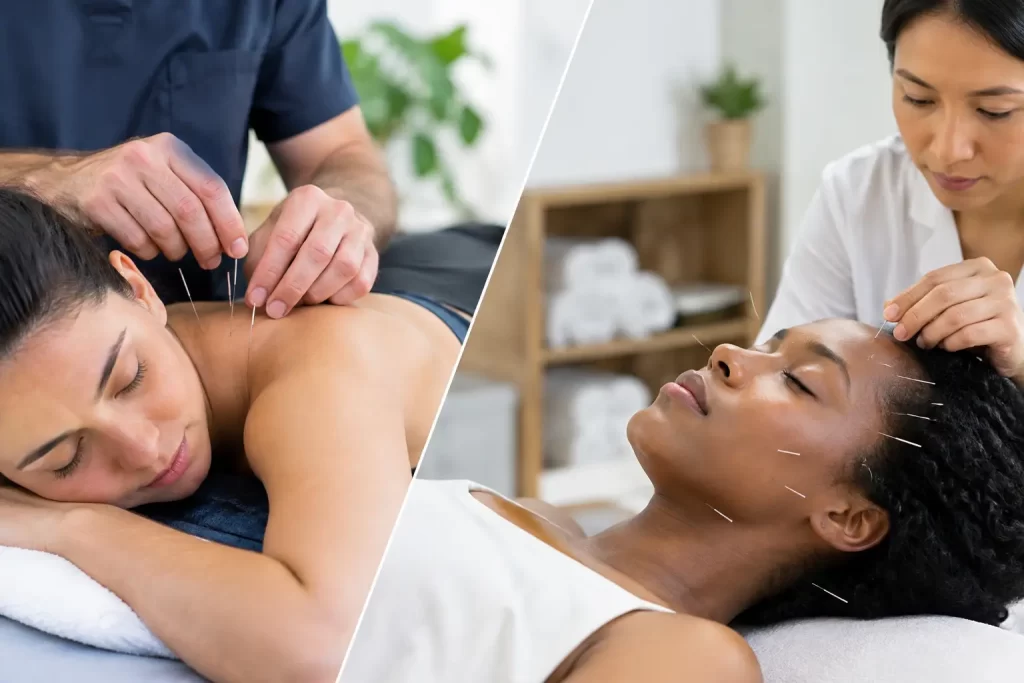
A tight knot in your shoulder, a low-back flare that keeps returning, or a tension headache that appears after every demanding week can make fast relief feel like the only goal. Yet when comparing dry needling versus acupuncture, the better question is not simply which one works faster. It is which approach best fits your symptoms, health history, comfort level, and larger goals for well-being.
Both treatments use very fine, sterile, single-use needles. Both may be helpful for pain and muscle tension. But they come from different clinical frameworks, are performed with different intentions, and can feel quite different in a treatment room. Understanding those distinctions can help you make a more comfortable, informed choice.
Dry Needling Versus Acupuncture: The Core Difference
Dry needling is a technique most often used to address tight, irritated, or painful muscle tissue. A practitioner places a thin needle into a trigger point, or a taut band within a muscle, with the goal of releasing tension and improving movement. The term “dry” distinguishes the treatment from injections, since no medication or fluid is introduced through the needle.
Acupuncture is part of East Asian medicine, a medical system developed over centuries that considers the body as an interconnected whole. Acupuncturists select points based not only on where pain is located, but also on patterns involving circulation, stress, sleep, digestion, menstrual health, energy, and other aspects of a person’s health. The goal may include easing a painful symptom, but treatment can also support the systems that affect how the body heals, regulates, and recovers.
In simple terms, dry needling commonly begins with the muscle. Acupuncture may address the muscle while also looking beyond it. There is overlap in the tools used, but not necessarily in the clinical lens guiding the treatment.
What Dry Needling Is Designed to Address
Dry needling is often considered when a specific muscle seems to be contributing to pain or restricted motion. For example, an overworked upper trapezius muscle may contribute to neck stiffness and some tension headache patterns. Tight hip muscles may affect how the low back, knees, or pelvis move. A focused dry needling approach may help calm that local muscle response.
During treatment, the practitioner may gently move the needle within the tissue to seek a brief twitch response. Not everyone experiences a twitch, and it is not required for a useful session. Some people notice a quick cramp-like sensation followed by a feeling of release. It is also common to feel soreness for a day or two, similar to the feeling after an unfamiliar workout.
The potential benefit of dry needling is its directness. When a clear muscular trigger point is part of the problem, it can be a valuable tool. Its limitation is that a local muscle approach may not fully address why the area became chronically tense in the first place. Repetitive posture, training demands, stress, poor sleep, an old injury, and nervous system sensitivity can all be part of that picture.
How Acupuncture Takes a Broader View
An acupuncture treatment may include needles in or near a painful area, but the point selection can extend to the arms, legs, hands, feet, scalp, or abdomen. This can be surprising to someone expecting every needle to go directly into the sore spot. In Chinese medicine, distal points are chosen for their relationship to the body’s larger patterns and channels.
A person with recurring migraines, for instance, may have neck and jaw tension that deserves local treatment. They may also be sleeping poorly, feeling overwhelmed, experiencing hormonal shifts, or relying heavily on caffeine to manage fatigue. A customized acupuncture plan can consider those connected factors rather than treating the head pain as an isolated event.
This whole-person approach is especially relevant when pain appears alongside anxiety, insomnia, digestive changes, fatigue, menstrual concerns, or fertility goals. It does not mean every symptom has one simple cause. It means your treatment plan has room to account for the ways physical strain and emotional stress can influence each other.
Acupuncture is often deeply relaxing. Some patients feel a mild heaviness, warmth, tingling, or dull ache around a needle. Others simply become calm enough to notice how much tension they have been carrying. Sensations should be manageable, and your practitioner can adjust the treatment at any time.
Can Acupuncture Include Dry Needling?
Yes. A licensed acupuncturist may use dry needling as one technique within a broader acupuncture treatment plan when it is appropriate. This can be especially helpful for patients whose symptoms include both a specific muscular restriction and a more complex pattern of stress, disrupted sleep, recurring headaches, or systemic imbalance.
For example, a session for persistent neck pain might include dry needling to address an active trigger point, then acupuncture points selected to support relaxation and recovery. Electrical stimulation, cupping, gua sha, movement guidance, or Chinese herbal medicine may also be considered when they fit the individual’s needs.
The value is not in adding as many modalities as possible. It is in choosing the few that make clinical sense for you. Some patients respond best to a gentle acupuncture approach. Others benefit from targeted dry needling for a period of time. A thoughtful plan can change as symptoms improve.
Training, Safety, and Why the Practitioner Matters
The safety and quality of either treatment depend heavily on the clinician’s education, anatomical knowledge, sterile technique, and ability to assess the person in front of them. Training requirements for dry needling vary by profession and state. Acupuncture is performed by licensed acupuncturists who receive extensive education in needling, point location, Chinese medicine diagnosis, and treatment planning.
Before treatment, share your complete health history. This includes medications, blood-thinning medications, pregnancy or the possibility of pregnancy, bleeding disorders, immune concerns, recent surgery, implants, pacemakers, and a history of fainting with needles. Also mention any new, severe, or unexplained pain. Needling can be supportive care, but it should not replace appropriate medical evaluation for urgent symptoms.
Minor bruising, tenderness, or temporary lightheadedness can occur. Serious complications are uncommon when treatment is performed properly, but no medical procedure is entirely without risk. Your practitioner should explain what to expect, obtain your consent, and welcome questions without pressure.
Which Approach Is Right for You?
If your main concern is a clearly defined muscular issue, such as a stubborn calf knot after running or limited shoulder movement, dry needling may be a useful part of your care. If your pain has been recurring for months, seems tied to stress or poor sleep, or comes with other health concerns, acupuncture may offer a more comprehensive starting point.
Still, the choice is rarely that neat. A runner with calf pain may also be under-recovering because of high stress and insomnia. A person seeking acupuncture for migraines may have a jaw muscle trigger point that benefits from dry needling. The most effective plan depends on the full story, not just the most painful spot.
At Acupuncture Atlanta, a first visit begins with listening. Your practitioner reviews your health history, current symptoms, daily routines, and treatment goals before recommending a customized approach. This creates space for care that is neither generic nor overly aggressive, whether you are seeking relief from pain, support for sleep and stress, or a path back to steadier vitality.
What to Expect After Treatment
Responses vary. Some people feel lighter or more mobile immediately, while others notice change gradually over several treatments. A temporary increase in soreness can happen after dry needling, particularly when an area has been very tight. After acupuncture, patients commonly report feeling relaxed or pleasantly tired, though some feel energized.
Give your body a little room to respond. Hydrate, eat regularly, avoid pushing through intense exercise if you are sore, and pay attention to changes in pain, sleep, mood, digestion, and movement. These observations help guide your next treatment and make the plan more precise.
Lasting improvement often comes from a series of small, well-chosen steps: the right hands-on treatment, better recovery habits, manageable movement, and support for the stressors your body has been signaling. The goal is not merely to quiet a symptom for a day. It is to help you feel more at ease in your body and better able to return to the life you want to live.