Your Acupuncture for TMJ Guide to Jaw Pain Relief
Jaw pain has a way of taking over ordinary moments. Chewing a meal, joining a video call, driving through Atlanta traffic, or simply waking up can become a reminder that your jaw is tight, sore, clicking, or difficult to move. This acupuncture for TMJ guide explains how a personalized, whole-person approach may help you manage jaw discomfort while looking at the patterns that can keep it coming back.
TMJ is often used as shorthand for temporomandibular disorders, or TMD. These conditions involve the jaw joints, the muscles that move the jaw, and sometimes the surrounding nerves and tissues. Because jaw symptoms can have several causes, meaningful care begins with listening closely rather than assuming every sore jaw needs the same treatment.
What TMJ Symptoms Can Feel Like
TMJ-related symptoms are not always limited to the joint directly in front of the ear. For many people, tension begins in the jaw and travels into the temples, cheeks, neck, shoulders, or upper back. Some notice morning headaches after clenching through the night. Others feel pain with chewing, experience popping or clicking, or find that their mouth does not open as comfortably as it once did.
Stress can be a major contributor, but it is rarely the entire picture. Teeth grinding, a bite change, prolonged computer posture, a past dental procedure, arthritis, injury, sleep disruption, and repetitive habits such as gum chewing may all play a role. Anxiety and chronic pain can also create a difficult cycle: the more tense the body feels, the more likely the jaw muscles are to stay guarded.
A complete evaluation from a dentist, physician, or other qualified provider may be appropriate, particularly when symptoms are new, severe, or persistent. Acupuncture can be a supportive part of care, but it should not replace evaluation for structural dental concerns, infection, fracture, or other medical conditions.
How Acupuncture for TMJ May Help
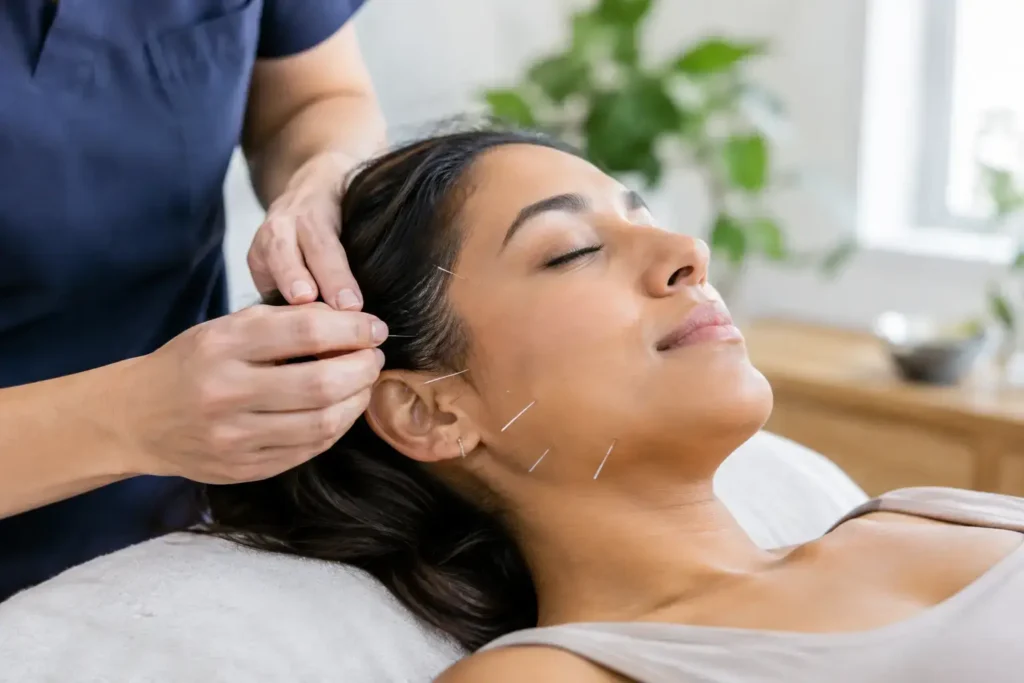
Acupuncture uses very fine, sterile needles placed at carefully selected points on the body. For TMJ concerns, treatment may include points in the face and jaw area as well as points on the hands, feet, arms, legs, scalp, and neck. This broader selection reflects an important principle of Chinese medicine: pain in one area can be influenced by tension, circulation, sleep, digestion, stress response, and the body’s overall capacity to recover.
From a modern clinical perspective, acupuncture may help modulate pain signaling, encourage local circulation, and reduce excessive muscle tension. Many patients find the treatment deeply calming, which can be valuable when jaw clenching is connected to a high-alert nervous system. The goal is not to force a joint into place. It is to help reduce the muscular guarding and pain patterns that may be limiting comfortable movement.
Results vary. Someone whose symptoms are largely related to work stress and nighttime clenching may respond differently than someone with significant joint degeneration or a recent injury. Acupuncture is often most helpful as part of a coordinated plan that may also include dental care, a night guard when recommended, physical therapy, gentle movement, and changes to habits that aggravate the jaw.
Treatment Is Not Limited to the Jaw
A skilled practitioner will not simply place needles where it hurts and send you on your way. Your treatment may address tender jaw muscles, but it may also include the neck and shoulders if posture is contributing to strain. If poor sleep, frequent headaches, digestive upset, or persistent stress are part of your health history, those concerns may shape the plan as well.
At Acupuncture Atlanta, this individualized approach begins with a comprehensive health history. The practitioner considers your symptoms, daily routines, stress level, sleep, medical history, and wellness goals before creating treatment tailored to you. Chinese herbal medicine or carefully selected supplements may be considered when appropriate, particularly when broader patterns such as stress, poor sleep, or inflammation appear to be affecting recovery.
What to Expect at Your First Appointment
Your first visit is a conversation as much as it is a treatment. Be prepared to describe when the jaw discomfort began, where you feel it, what makes it worse or better, and whether you notice clicking, headaches, ear fullness, grinding, or limited opening. Mention recent dental work, orthodontic treatment, injuries, medications, and any diagnoses from your dentist or physician.
During treatment, you will rest comfortably while the practitioner places needles. Sensations can range from a light pinch at insertion to warmth, heaviness, tingling, or a dull ache that resolves quickly. Many people feel little more than a brief sensation. Acupuncture should not feel sharply painful, and you should always let your practitioner know if you are uncomfortable.
Depending on your needs, care may include gentle electrical stimulation, cupping, gua sha, or dry needling for particularly tight muscles. These modalities are not automatically necessary. The best choice depends on your sensitivity, the nature of your pain, your health history, and how your body responds over time.
Afterward, some patients feel looser and calmer immediately. Others notice gradual changes over several treatments, such as fewer tension headaches, easier jaw movement, or less morning soreness. Temporary tenderness or mild fatigue can occur, especially when tight muscles are being addressed. Staying hydrated and choosing a quieter evening after treatment can be helpful.
How Many Sessions Will You Need?
There is no honest one-number answer. Acute jaw tension may improve within a few visits, while symptoms that have developed over months or years generally need a more consistent course of care. The frequency of clenching, the presence of headaches or neck pain, sleep quality, and any underlying joint changes all matter.
Your practitioner should reassess your progress rather than continuing a preset series without a conversation. Early treatment may be scheduled more closely together, followed by less frequent visits as symptoms stabilize. The aim is to help you build lasting relief and better awareness of the factors that trigger jaw tension, not to make you dependent on treatment.
Helpful Habits Between Treatments
Small adjustments can protect the progress you make in the treatment room. Notice your resting jaw position: your lips can be together while your teeth remain slightly apart. This simple cue can interrupt daytime clenching, especially during concentrated work or stressful conversations.
Choose softer foods temporarily if chewing increases pain, and avoid repeatedly testing the jaw by opening wide or making it click. Gentle heat along the jaw and neck may soothe tight muscles. A brief breathing practice before bed can also be surprisingly useful for people who hold stress in their face and jaw.
Pay attention to your workstation as well. When the head drifts forward toward a screen, the neck and jaw often work harder to compensate. Raising the screen, taking regular movement breaks, and avoiding cradling a phone between the shoulder and ear can reduce unnecessary strain.
When Jaw Pain Needs Prompt Medical Attention
Acupuncture is not the right first response for every kind of facial or jaw pain. Seek prompt medical or dental evaluation if you have facial swelling, fever, a suspected tooth infection, sudden inability to open or close the jaw, jaw pain after a significant injury, unexplained numbness or weakness, or chest pain accompanied by jaw pain, shortness of breath, nausea, or sweating.
It is also wise to speak with your practitioner about blood-thinning medication, pregnancy, implanted electrical devices, bleeding disorders, or a history of fainting with needles. These details do not necessarily rule out acupuncture, but they help your care team adapt treatment safely.
Jaw pain can make your whole day feel smaller. With a thoughtful assessment, coordinated care when needed, and a treatment plan that respects both your symptoms and your full health history, there is a path toward more comfortable movement, calmer muscles, and a better chance to get back on track to health and vitality.