Chinese Herbs for Menstrual Cramps.
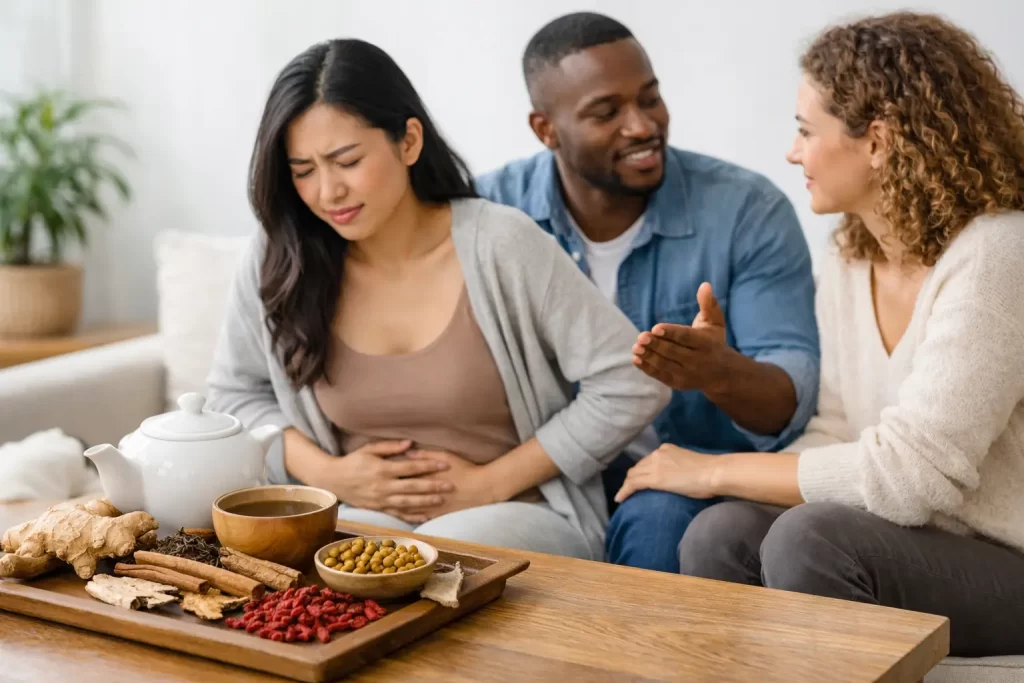
A heating pad may take the edge off, but it does not answer why one person feels a dull ache on day one while another loses sleep, misses work, or has pain that begins days before bleeding. Chinese herbs for menstrual cramps are selected with that difference in mind. In Chinese medicine, the timing, location, quality, and accompanying symptoms of pain all help shape care.
For some people, cramps are occasional and manageable. For others, they arrive alongside low back pain, clotting, digestive changes, headaches, fatigue, irritability, or a cycle that feels increasingly unpredictable. A personalized herbal plan can be a thoughtful complement to conventional gynecologic care, especially when it is paired with acupuncture and a clear understanding of your overall health history.
Why Menstrual Cramps Are Not All the Same
From a conventional medical perspective, menstrual cramps are often linked to prostaglandins, hormone-like substances that cause the uterus to contract. Higher levels can mean stronger contractions and more pain. Conditions such as endometriosis, fibroids, adenomyosis, ovarian cysts, pelvic inflammatory disease, and an intrauterine device can also contribute to painful periods.
Chinese medicine adds another useful layer of observation. Rather than treating every cramp with the same formula, a practitioner looks for patterns in how your body moves through the menstrual cycle. The goal is to support healthier circulation, reduce tension or stagnation, warm the body when cold is a factor, and strengthen underlying systems when fatigue or depletion is part of the picture.
These patterns are not conventional medical diagnoses. They are a clinical framework used to guide individualized treatment. Two people can both have severe cramps and need entirely different herbal strategies.
When Pain Feels Fixed, Sharp, or Worse with Clots
In Chinese medicine, sharp, fixed pain or dark menstrual blood with clots may point toward a pattern often described as blood stasis. The clinical focus may be on supporting circulation and easing the sense of congestion that can make cramps feel intense. Pain that improves once bleeding begins or after clots pass can offer another helpful clue.
When Stress Shows Up in Your Cycle
If cramps come with breast tenderness, mood changes, sighing, neck and shoulder tightness, or a feeling that everything is worse during a particularly demanding month, a practitioner may consider qi stagnation. This pattern often reflects the close relationship between stress, muscle tension, digestion, sleep, and the menstrual cycle. Herbs may be chosen to encourage smoother movement while also supporting emotional steadiness.
When Cold Makes Cramps Worse
Some people feel better with warmth and significantly worse with cold drinks, cold weather, or an ice pack. They may have a pale flow, a preference for heat, or lower abdominal pain that feels constricted. In this situation, warming herbs may be considered. That is one reason generalized online advice to use cooling or warming herbs can be unhelpful. The right direction depends on your pattern.
When Cramps Come with Fatigue or Light Flow
A lighter period, dizziness, dry skin, poor sleep, or ongoing fatigue may suggest that the body needs more than short-term pain relief. Chinese medicine may emphasize nourishment and support for healthy blood production and recovery. This approach can be particularly relevant after a stressful season, restrictive dieting, intense training, illness, or prolonged poor sleep.
Common Chinese Herbs for Menstrual Cramps
Individual herbs rarely tell the full story. Chinese herbal medicine is traditionally prescribed in formulas, where ingredients work together and are adjusted to the person taking them. A formula that is ideal for a cold, crampy pattern may be wrong for someone with heat signs, heavy bleeding, or a medication interaction.
That said, several herbs appear frequently in formulas used for menstrual discomfort. Dang gui, often called angelica root, is commonly used to nourish and move blood. Bai shao, or white peony root, is often selected to ease spasms and support the blood. Chuan xiong may be used to encourage circulation and address headache or pain patterns that accompany the cycle. Xiang fu is commonly included when stress, mood shifts, or a feeling of tension are central to the picture.
In formulas intended for cold-related discomfort, a practitioner may consider warming ingredients such as gui zhi, cinnamon twig, or gan jiang, dried ginger. For circulation-focused patterns, herbs such as tao ren and hong hua may be included in carefully considered amounts. These examples are not a self-treatment menu. Their actions, dose, timing, and combinations matter.
Well-known formulas can also be useful starting points for clinical thinking. Gui Zhi Fu Ling Wan is often considered for certain circulation patterns. Xiao Yao San may be considered when stress, mood changes, and digestive symptoms are woven into the cycle. Dang Gui Shao Yao San may be considered when cramping occurs alongside signs of deficiency or fluid imbalance. In practice, an experienced practitioner may modify a classic formula substantially or choose a different approach altogether.
What a Personalized Herbal Visit Looks Like
A thoughtful first visit is more comprehensive than a quick question about pain level. Your practitioner will ask about the age when cramps began, whether they have changed, where you feel them, what improves or aggravates them, and whether pain occurs before, during, or after bleeding. The color and consistency of menstrual flow, cycle length, digestion, sleep, stress, energy, fertility goals, medications, and medical diagnoses all matter.
Tongue and pulse assessment may add further information within the Chinese medicine framework. Together, these details help determine whether an herbal formula is appropriate, which form may suit you best, and how often your plan should be reassessed. Herbs may be prescribed as granules, capsules, tablets, teas, or customized formulas depending on the clinical need and your preferences.
At Acupuncture Atlanta, herbal care is considered alongside acupuncture because the combination can address both immediate discomfort and the broader patterns contributing to difficult cycles. Acupuncture may help relax muscle tension, support circulation, and create space for the nervous system to settle. Herbs can offer ongoing support between visits. Neither approach needs to replace appropriate medical evaluation or prescribed treatment. We carry a wide range of Chinese herb formulas and brands for menstrual issues. You can also order herbal formulas on our ecommerce store Acuatlanta.net.
Safety Matters with Herbal Care
Natural does not automatically mean safe for every person or every cycle. Chinese herbs can interact with prescription medications and may not be appropriate during pregnancy, while trying to conceive, during breastfeeding, or with certain medical conditions. This is particularly important if you take blood thinners, have a bleeding disorder, use fertility medications, have liver or kidney disease, or have a history of hormone-sensitive conditions.
Quality also matters. Herbs should come from reputable sources that prioritize proper identification, manufacturing standards, and contaminant testing. A qualified practitioner can help you avoid questionable products, duplicative ingredients, and formulas that do not fit your symptoms.
It is also wise to involve your primary care clinician or gynecologist, especially if you are already receiving treatment for menstrual pain. Integrative care works best when your providers have a clear picture of what you are taking and what you are trying to improve.
When Cramps Need Medical Evaluation First
Do not assume that severe pain is simply something to endure. Schedule medical evaluation if cramps are new or rapidly worsening, interfere with daily life, occur between periods, or happen with unusually heavy bleeding. Soaking through a pad or tampon every hour for more than two hours, passing large clots, fainting, fever, vomiting, pain during sex, or a positive pregnancy test with pain or bleeding deserve prompt attention.
These symptoms can have treatable causes. Identifying conditions such as endometriosis or fibroids does not rule out acupuncture or herbs. It helps create a safer, more informed plan that respects both your diagnosis and your quality of life.
Small Changes That Can Support Your Treatment Plan
Herbs work within the context of daily life. During the week before and first days of your period, many people benefit from regular meals, adequate hydration, gentle movement, and more consistent sleep. A warm compress over the lower abdomen may be comforting when cold worsens symptoms. If stress clearly amplifies your cramps, even brief practices such as slow breathing, a short walk, or stepping away from screens before bed can support the work happening in treatment.
Keep a simple cycle record for two or three months. Note when pain begins, how long it lasts, its intensity, the appearance of your flow, bowel changes, mood, sleep, and what actually helps. This record gives your practitioner a more accurate foundation than trying to remember a difficult day after it has passed.
You deserve care that takes menstrual pain seriously without reducing you to a single symptom. When the plan reflects your cycle, your health history, and the way stress and daily demands affect your body, it becomes easier to move toward periods that feel more manageable and a steadier sense of vitality throughout the month.