Cupping Bruise Duration: How Long Marks Last
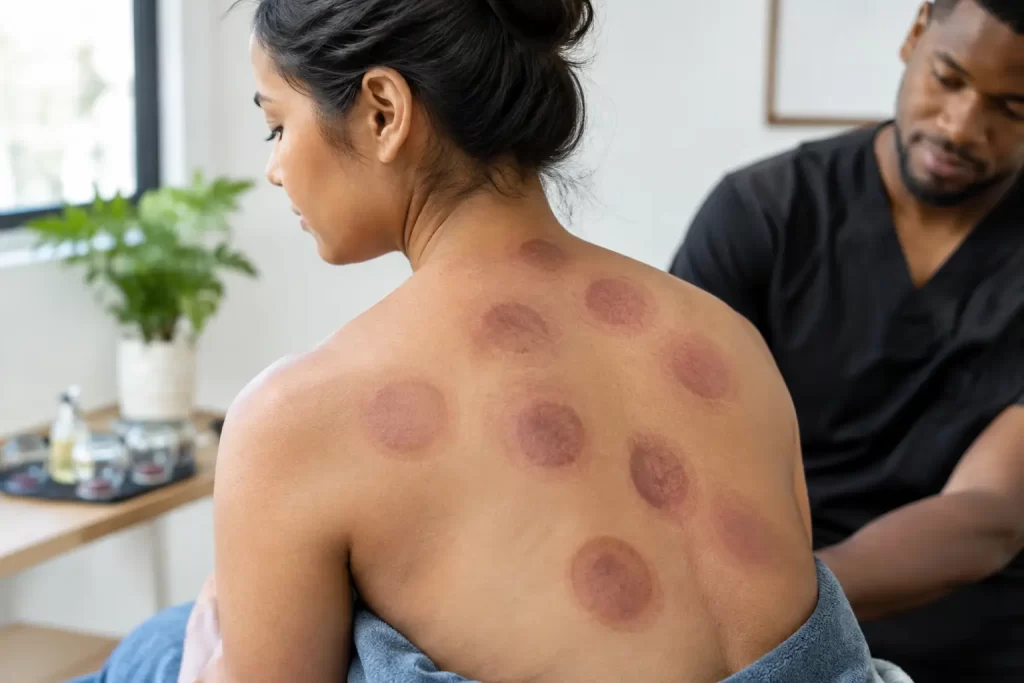
A round mark after cupping can look dramatic, especially if it is your first treatment. Cupping bruise duration varies from person to person, but most marks fade gradually over several days to about two weeks. Their color and appearance are not, by themselves, a sign that anything has gone wrong.
Cupping is often used alongside acupuncture to ease areas of muscular tension, support circulation, and help the body settle after stress or physical strain. At Acupuncture Atlanta, the approach is always individualized: the placement, suction level, and timing of cups should reflect your health history, sensitivity, goals, and how your body responds.
Why cupping leaves circular marks
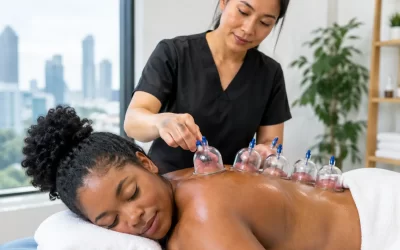
Traditional cupping uses glass, plastic, or silicone cups to create gentle to firm suction on the skin. That suction draws tissue upward and encourages local circulation. It can leave temporary red, purple, or brownish circles, commonly on the back, shoulders, hips, or legs.
Although people often call these marks “cupping bruises,” they are not identical to the bruises you might get after bumping into a table. A typical impact bruise occurs when an injury damages tiny blood vessels beneath the skin. Cupping marks are created by negative pressure rather than a blunt-force injury. Still, both can involve small amounts of blood moving outside the tiniest vessels, which is why the colors can look familiar.
The shade does not reliably measure how much benefit you received. A darker mark does not mean the treatment worked better, and a lighter mark does not mean nothing happened. Skin tone, hydration, circulation, medications, the intensity of suction, and the condition of the treated tissue can all affect what you see afterward.
Cupping bruise duration: what is typical?
For many people, cupping marks begin to soften within three to seven days and are mostly gone within one to two weeks. Light pink or red circles may resolve within a few days. Deeper purple, blue, or burgundy marks can take longer, sometimes up to two weeks or a little more.
Color changes are part of the normal fading process. A mark may begin red or purple, then shift toward brown, yellow, or green before disappearing. It should gradually become less noticeable rather than spreading, becoming increasingly tender, or developing new symptoms.
The location matters, too. Areas with thicker muscle tissue, such as the upper back, may be treated with more suction than sensitive areas. If you have had cups placed over a particularly tight shoulder or hip, the mark there may last longer than one on a less congested area.
Your personal recovery pattern also matters. Some patients barely mark after cupping, even with a helpful treatment. Others mark easily and hold color longer. Age, skin sensitivity, sun exposure, general hydration, sleep, activity level, and circulation can all play a role.
What can make marks last longer
Certain medications and health conditions can increase bruising or prolong discoloration. Blood thinners, antiplatelet medicines, frequent use of anti-inflammatory medication, some supplements, and conditions that affect clotting should be discussed before treatment. Do not stop prescribed medication for cupping or acupuncture without guidance from the clinician who prescribed it.
Your acupuncturist also needs to know if you are pregnant, have a bleeding disorder, have fragile skin, are healing from surgery, or have a history of significant unexplained bruising. This information does not automatically rule out care. It helps your practitioner choose the safest modalities and adjust the treatment plan appropriately.
How to care for cupping marks afterward
Most cupping marks require very little care. Give the area time, keep your body comfortably warm, and avoid irritating the skin. You do not need to massage the circles aggressively or try to make them disappear quickly.
For the first day or two, it can help to avoid very hot showers, saunas, hot tubs, and intense heat directly over the treated area. The skin and underlying tissue may be temporarily sensitive, and excessive heat can feel uncomfortable. Gentle movement, regular meals, adequate water, and a good night of sleep are usually more supportive choices.
Protect the marks from direct sun. Fresh discoloration can become more noticeable when exposed to ultraviolet light, and sunscreen or clothing can help prevent lingering pigment changes. If the skin is intact and comfortable, a simple fragrance-free moisturizer is generally fine. Avoid exfoliating acids, strong topical products, or vigorous scrubbing over the area until it has settled.
If you feel mildly sore, think of the sensation as similar to what may follow a deep tissue massage or a new workout. Light walking and gentle stretching can be appropriate if they feel good. However, skip strenuous exercise for a short period if the treated area is tender or you feel fatigued after your session.
When a cupping mark deserves a call
Cupping should not cause broken skin during standard dry cupping, and the marks should not be intensely painful. Reach out to your treating practitioner or another qualified clinician if you develop blistering, open skin, increasing warmth, significant swelling, drainage, fever, numbness, or pain that is severe or worsening.
It is also worth checking in if the discoloration is not improving after about two weeks, if it appears far beyond the cup placement, or if you are experiencing frequent unexplained bruising elsewhere. Those concerns may be unrelated to cupping, but they deserve thoughtful evaluation.
Seek urgent medical care for signs of a serious allergic reaction, breathing difficulty, chest pain, fainting, or symptoms of a blood clot. These are not expected effects of cupping and should never be managed as routine aftercare.
Can you have another cupping session before marks fade?
Sometimes, yes, but it depends on the area, your response, and your treatment goals. A skilled practitioner may work in a different location, use lighter suction, shorten the time cups are left in place, or choose another modality such as acupuncture, gua sha, gentle bodywork, or electrical stimulation.
Repeatedly applying strong suction directly over dark, tender marks is usually not the goal. More intensity is not always more therapeutic. A personalized treatment plan pays attention to how your body is responding from one visit to the next, including changes in pain, sleep, stress, mobility, and energy.
This is especially relevant for busy professionals and active adults who want relief but also need to feel comfortable in work clothes, at social events, or during athletic activities. Let your practitioner know about upcoming photos, travel, or occasions when visible marks may be inconvenient. Cupping can often be modified, moved to less visible areas, or postponed without losing sight of the larger care plan.
A calmer way to think about the marks
Visible circles can make cupping feel more mysterious than it is. The marks are a temporary response to suction, not a scorecard for your health and not a required part of every beneficial session. Some people appreciate the sense of release they feel afterward; others prefer very gentle cupping or no visible marks at all.
The best approach is open communication. Before treatment, share medications, skin concerns, prior reactions, and what you hope to address. Afterward, pay attention to whether the treated area feels more mobile, less guarded, or simply more relaxed, while giving any discoloration time to fade naturally.
If you are considering cupping for ongoing muscle tension, headaches, stress-related discomfort, or recovery support, choose care that looks beyond the marks on the skin. A thoughtful treatment should leave you feeling heard, informed, and supported as you work toward better balance and vitality.