What to expect at your First Acupuncture Visit?

Your first acupuncture appointment should not feel rushed or mysterious. If you are wondering what to expect at your first acupuncture visit, expect time to talk through what has been bothering you, how it affects your life, and what feeling better would look like for you. The treatment itself matters, but so does the conversation that shapes it.
For someone dealing with persistent back pain, migraines that keep returning, fertility concerns, poor sleep, anxiety, or the physical toll of a demanding schedule, a first visit is an opportunity to be heard as a whole person. Acupuncture care is individualized because two people with the same diagnosis may have different symptoms, stressors, health histories, and goals.
What Happens at Your First Acupuncture Visit
All first appointments include a detailed health history, a Chinese medicine assessment, an acupuncture treatment when appropriate, and guidance for the days ahead. The exact flow varies based on your needs, but the purpose is consistent: to understand the patterns behind your concerns and build a treatment plan tailored to you.
You will start with a thorough conversation
Your practitioner will ask about your primary reason for coming in, including when symptoms began, what makes them better or worse, and what you have already tried. You may also discuss current medications, supplements, past injuries, surgeries, allergies, diagnoses, and relevant lab work or imaging.
The conversation often extends beyond the symptom that brought you through the door. Sleep quality, energy, digestion, menstrual cycles, stress levels, exercise, appetite, and emotional well-being can all offer useful context. This is not about judging your habits or making a problem seem more complicated than it is. It is about identifying connections that may affect your recovery and day-to-day vitality.
If you are seeking support for fertility, for example, your practitioner may ask about cycle length, period symptoms, previous pregnancies, testing, and care you are receiving from other providers. If pain is the concern, they may ask about its location, quality, severity, movement patterns, and how it limits work, sleep, or activity. Bring a list of questions and any information you think may help. You do not have to remember every detail perfectly.
Your practitioner may use Chinese medicine observations
Acupuncture is rooted in Chinese medicine, which uses its own framework for understanding health and imbalance. Along with your health history, your practitioner may feel your pulse at both wrists and look at your tongue. These observations are noninvasive and help inform a customized treatment strategy.
They may also assess posture, range of motion, tender areas, muscle tension, or skin changes when these are relevant to your concern. Depending on the situation, they may recommend that you continue working with your physician or another specialist. Acupuncture can complement conventional care, but it is not a substitute for urgent medical evaluation or treatment for serious conditions.
You will have time to get comfortable
Wear loose, comfortable clothing if possible. Many common acupuncture points are located on the arms, lower legs, hands, feet, head, and abdomen. For areas that are harder to access, you will be appropriately draped, and only the treatment area will be exposed.
Let your practitioner know if you are nervous about needles, have a tendency to faint, are pregnant or trying to conceive, take blood-thinning medication, have a pacemaker, or have any other concern that could affect treatment choices. A good first visit makes room for these conversations. You are always welcome to ask what a treatment involves before agreeing to it.
What Acupuncture Needles Actually Feel Like
Acupuncture needles are sterile, single-use, and much thinner than the needles used for injections or blood draws. Many people feel little more than a brief tap as a needle is placed. Others notice a quick pinch, warmth, tingling, heaviness, or a dull sensation around the point.
That sensation is often temporary and should not feel sharp or persistently painful. Tell your practitioner right away if something feels uncomfortable. Needle placement, depth, or stimulation can be adjusted. Treatment is collaborative, not something you simply have to endure.
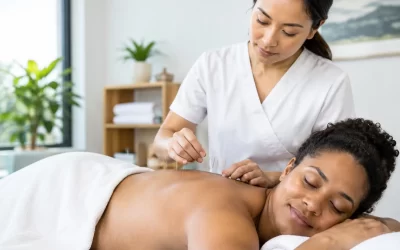
Once the needles are in place, you will typically rest quietly for about 15 to 30 minutes. Some patients feel deeply relaxed, while others simply enjoy a rare stretch of stillness. It is also normal to be curious, skeptical, or unsure what to expect the first time. There is no right way to feel during acupuncture.
Your treatment may include more than needles
Your first session may involve acupuncture alone, or your practitioner may recommend complementary therapies based on your goals and comfort level. At Acupuncture Atlanta, customized care may include modalities such as cupping, gua sha, electrical stimulation, dry needling, facial acupuncture, or chakra balancing when clinically appropriate.
Cupping uses gentle suction to support circulation and release tight tissue. It can leave temporary circular marks, especially when used for muscle tension, and those marks are not bruises in the usual sense. Gua sha uses a smooth tool to gently stimulate the skin and soft tissue. Electrical stimulation sends a mild current between selected acupuncture needles and may be useful for certain pain or muscle-related concerns.
Not every modality is right for every person or every visit. Your health history, preferences, sensitivity, and treatment goals all matter. A patient seeking help for insomnia may receive a different approach than someone recovering from a sports injury, even if both are experiencing stress.
What Happens After the Needles Come Out
After treatment, your practitioner will remove the needles and check in about how you feel. You may feel calmer, lighter, sleepy, energized, or simply more aware of your body. Some people notice a change in symptoms immediately, while others experience gradual changes over several treatments.
Mild soreness at a needle site, temporary fatigue, or a small bruise can occur. These effects are usually short-lived. Drinking water, eating regular meals, and giving yourself a little extra space to rest can be helpful, especially after your first appointment. If you have questions after treatment or experience anything that concerns you, contact the clinic.
Your practitioner may also discuss supportive next steps. These might include gentle movement, heat or ice guidance, sleep habits, stress-management practices, dietary suggestions, or Chinese herbal formulas and supplements. Herbal recommendations should be based on your individual history and coordinated thoughtfully with medications and other care you receive.
How Many Visits Will You Need?
This depends on the condition, how long it has been present, your overall health, and your goals. An acute issue, such as a recent muscle strain, may respond differently than chronic migraines, long-standing digestive symptoms, or fertility support. Some people come in for focused short-term care, while others incorporate acupuncture into an ongoing wellness routine.
Your practitioner should be clear about the initial plan and reassess your response along the way. A thoughtful plan is not a promise of a particular outcome. It is a practical starting point that can be adjusted as your body and symptoms respond.
How to Prepare for Your Appointment
Eat a light meal or snack beforehand unless you have been instructed otherwise. Arriving overly hungry can make it harder to relax. Avoid alcohol before your visit, and consider limiting caffeine if it tends to make you jittery or anxious.
Bring a current list of medications and supplements, along with any relevant test results or reports if you have them. Plan to arrive a few minutes early so you can complete paperwork without feeling hurried. Most of all, come as you are. You do not need to know the language of Chinese medicine or have a polished explanation for every symptom.
The value of a first acupuncture visit is not just in receiving a treatment. It is in beginning a conversation about what your body has been carrying and creating a caring, realistic path toward feeling more balanced, capable, and well.