Dry Needling Pain: What It Feels Like
A tight knot in your shoulder can make a workday feel much longer than it is. If you have heard that dry needling may help but are worried about dry needling pain, that concern is understandable. Most people want a clear answer before agreeing to a treatment involving a needle.
Dry needling is often described as uncomfortable rather than painful. The sensation varies with the area being treated, the sensitivity of the muscle, your stress level, and the underlying condition bringing you in. A skilled practitioner should explain what to expect, check in throughout the session, and adjust treatment to your comfort level.
What dry needling feels like during treatment
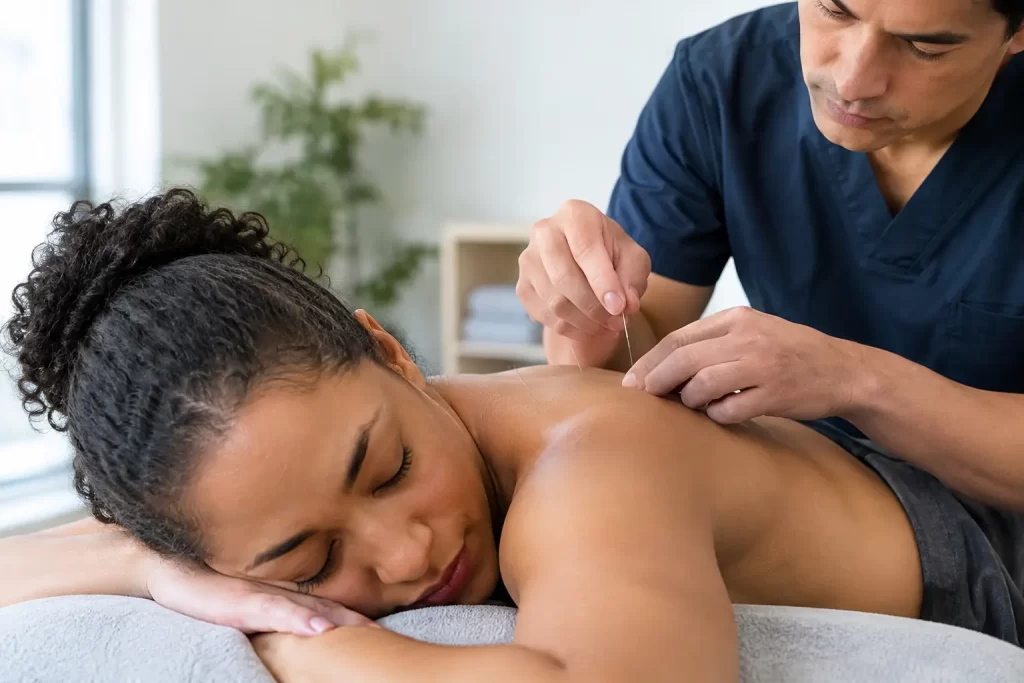
Dry needling uses very thin, sterile, single-use needles to address sensitive muscle tissue, often called trigger points. These are taut, irritable areas in a muscle that may contribute to local tenderness, restricted movement, or pain that seems to travel elsewhere.
When the needle first enters the skin, many people feel little or nothing. The more noticeable sensation can happen when the needle reaches a tight area of muscle. You may feel a brief pinch, ache, heaviness, cramping, or a quick muscle twitch. A twitch response can be surprising, but it is usually very short.
Some areas are naturally more sensitive than others. Muscles around the neck, jaw, hips, calves, and hands may feel different from larger muscles in the back or thigh. Needling an already irritated muscle can also create a stronger sensation than treating tissue that is simply tight.
Pain is not the goal. More intensity does not mean better care or a better result. Treatment should be specific and measured, with the practitioner working within a level you can tolerate. Let them know right away if you feel sharp, burning, electric, or overwhelming pain. Your feedback helps guide a safer, more effective session.
Dry needling pain afterward: why soreness can happen
It is common to have localized soreness after dry needling. Many people compare it to the feeling after a new workout, a deep massage, or pressure on a bruise. This response often settles within 24 to 48 hours, though it can last longer when muscles are particularly guarded or treatment addresses several areas.
The body may need time to respond after a muscle has been stimulated. Mild tenderness, temporary stiffness, fatigue, or a small bruise can occur. Some people feel looser immediately, while others notice a gradual change over the next few days. Both experiences can be normal.
Your practitioner may recommend gentle movement, adequate water, warmth, or a brief walk after treatment. These simple measures can support circulation and keep the treated area from stiffening up. Strenuous activity may be fine for some people but may not be the best choice immediately after treatment, especially if the muscle is sore. The right plan depends on your activity level, health history, and the body area treated.
Avoid judging the value of a session only by how you feel in the first hour. For persistent pain patterns, progress often comes from a series of carefully tailored treatments combined with movement, rest, and changes that support the way your body functions day to day.
When pain is not something to push through
Mild, short-lived soreness is one thing. Severe or worsening symptoms deserve prompt attention. Contact your practitioner or a medical professional if you experience signs such as:
- Severe pain that does not improve or continues to intensify
- Significant swelling, spreading redness, warmth, or drainage at a treatment area
- Fever, chills, fainting, or feeling generally unwell
- Shortness of breath, chest pain, or any sudden new symptom that feels urgent
These reactions are uncommon, but clear communication matters. Tell your provider about medications, bleeding concerns, pregnancy, medical conditions, recent procedures, and past experiences with needles before treatment begins. This information helps determine whether dry needling is appropriate and how it should be adapted.
How dry needling differs from acupuncture
Dry needling and acupuncture both use fine needles, but they may be approached through different clinical frameworks. Dry needling generally focuses on muscles, movement patterns, and trigger points. Acupuncture is rooted in Chinese medicine and may address pain alongside broader patterns involving stress, sleep, digestion, menstrual health, energy, and overall balance.
In an integrative setting, these approaches may be used separately or together when appropriate. For example, a person with recurrent neck tension and headaches may benefit from local work on tight muscle tissue while also receiving acupuncture intended to support nervous system regulation, sleep, and stress resilience. The treatment plan should follow your goals and complete health history, not a one-size-fits-all protocol.
That distinction is meaningful because pain is rarely only about one tight muscle. Long hours at a desk, disrupted sleep, anxious breathing patterns, an old injury, training demands, and daily stress can all influence how the body holds tension and recovers from it.
What helps make treatment more comfortable
Arriving rushed, hungry, dehydrated, or highly anxious can make any hands-on treatment feel more intense. A light meal, comfortable clothing, and a few extra minutes to settle can help. If needles make you nervous, say so at the beginning. There is no need to minimize that concern.
A thoughtful first visit should include questions about your symptoms, prior injuries, activities, health conditions, medications, and what you hope to return to doing. It should also include a conversation about options. Dry needling may be one part of care, but it is not the only option for every painful condition.
At Acupuncture Atlanta, care begins with listening to the full picture. For some patients, acupuncture, gentle bodywork, electrical stimulation, cupping, gua sha, or Chinese herbal support may be considered alongside or instead of dry needling. The goal is not to make treatment intense. It is to create a plan that helps you move toward greater comfort, function, and vitality.
Is dry needling right for your pain?
Dry needling may be considered for muscular pain, limited range of motion, sports-related overuse, tension patterns, and certain headache or jaw concerns. Still, it is not automatically the right fit for every situation. Acute injury, unexplained pain, infection, certain bleeding risks, needle anxiety, and complex medical histories may call for a different approach or coordination with another healthcare professional.
A qualified practitioner will not promise that one session will resolve a long-standing problem. They will assess how your symptoms behave, explain realistic expectations, and revisit the plan as your body responds. If an approach is too uncomfortable or does not appear to be helping, that is useful information, not a personal failure.
The most reassuring question is not whether dry needling hurts at all. It is whether you will be heard, treated with care, and given options that respect your body. With a personalized approach, treatment can be both purposeful and manageable as you work toward feeling more at home in your body.